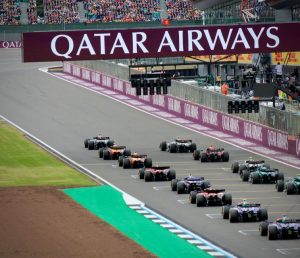
What Is Pole Position in Racing? Meaning, Qualifying and Why It Matters
Pole position is the first starting place on a racing grid, usually earned by setting the fastest qualifying time. Learn how it is decided, what advantages it offers and why it does not guarantee victory.

A fraction of a second can decide who starts at the front of a racing grid. The driver who records the decisive qualifying performance earns pole position—the place every competitor wants, but one that guarantees only a strong starting opportunity, not a win.
What does pole position mean in racing?
In motorsport, pole position is the first grid slot for a race. The driver who occupies it is often called the pole sitter. In most modern racing series, that place is awarded to the competitor who produces the fastest qualifying performance under the event’s rules.
The exact process varies. In Formula 1, pole position normally goes to the driver with the fastest time in the final qualifying session, known as Q3. In other championships, the pole winner may be determined by a single qualifying lap, a timed session, a knockout format or a qualifying race. The meaning remains broadly the same: pole is the leading starting position earned through qualifying.
Searches for “what is pole position in racing,” “what does pole mean in motorsport” and “who starts on pole” are usually asking about this distinction between qualifying and the race itself. Pole position belongs to the starting order; it is not the same as winning the event.
How is pole position decided?
Drivers and teams use qualifying to set the race grid. They may adjust fuel load, tyre choice, engine settings, suspension balance and aerodynamic configuration to produce one fast lap or the best average performance allowed by the format.
In a traditional timed qualifying session, the fastest lap earns the front grid position. A driver with the second-fastest time starts alongside or behind the pole sitter, depending on the circuit layout and series regulations. Some events use two-car rows, while others arrange the field in a single line.
Qualifying can become more complicated when weather, traffic or track position affects lap times. A red flag may interrupt a session, while yellow flags can prevent a driver from improving. Penalties also matter. A driver may set the fastest qualifying time but start lower down the grid after receiving a grid penalty for an infringement or a component change.
On a sprint weekend, the event may have more than one qualifying session. One session can set the sprint grid and another can determine the starting order for the main race. That is why the phrase “pole position” should be read alongside the specific championship’s sporting regulations.
Why is starting from pole position an advantage?
The clearest benefit is track position. The pole sitter begins ahead of the cars that would otherwise create traffic, turbulence and overtaking risks. At circuits where passing is difficult, that advantage can shape the entire race.
The front position can also give a driver a cleaner view of the opening corners. The field behind may have to choose between defending, attacking or avoiding incidents, while the pole sitter can focus on making a controlled launch. A strong start can turn a narrow qualifying advantage into an early lead.
Track layout makes a major difference. Pole may be especially valuable at a narrow street circuit, where following another car closely is difficult. At a wide track with several long straights and reliable overtaking zones, the benefit may be smaller. The distance to the first corner matters too: a long run from the start line can give second place an opportunity to use the slipstream.
In endurance racing, the advantage is often less decisive because races last for hours and include pit stops, driver changes, traffic management and changing conditions. In a short sprint event, a front-row start can carry much more weight.
Does pole position mean the driver will win?
No. Pole position is a qualifying achievement, not a prediction of the final result. Race starts, tyre wear, strategy, reliability, weather and overtaking opportunities can all change the order.
A pole sitter may lose the lead before the first corner through a slow launch or wheel spin. Another driver may have a faster race pace but struggle to show it during a single qualifying lap. Mechanical problems, penalties or a poorly timed pit stop can also erase the value of starting first.
For that reason, statistics about pole position and race wins should be interpreted carefully. A high conversion rate suggests that a driver or team is effective from the front, but it does not mean every pole becomes a victory. The relationship is strongest at circuits where overtaking is limited and weaker where strategy or slipstreaming creates frequent position changes.
Pole position, front row and fastest qualifier
These terms are connected but not identical:
- Pole position: the first starting place on the grid.
- Pole sitter: the driver who starts from pole.
- Front row: the first row of the grid, usually containing pole and second place.
- Fastest qualifier: the driver who recorded the quickest qualifying performance, although a penalty may prevent them from starting first.
- Starting grid: the complete order in which competitors begin the race.
These distinctions explain why a result may list one driver as the fastest in qualifying while another officially occupies pole position after penalties or regulatory adjustments.
Frequently asked questions about pole position racing
What does P1 mean in qualifying?
P1 means first place in the relevant qualifying session. If no penalty changes the grid, the driver in P1 normally starts the race from pole position.
Is pole position always on the inside of the first corner?
No. The side of the track used for pole position depends on the circuit, the direction of the first corner and the series’ grid regulations. The cleanest or most advantageous side can vary with weather and tyre conditions.
Can a driver lose pole position?
Yes. A driver can lose the official pole start because of a track-limit violation, a technical infringement, a penalty, a qualifying-time deletion or a grid penalty applied before the race.
What is pole position in Formula 1?
In Formula 1, pole position usually goes to the driver with the fastest valid lap in the final qualifying segment for the main Grand Prix. Sprint weekends can use separate sessions to establish different starting grids.