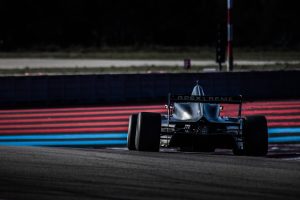
What Is Slipstreaming in Racing? How Drafting Creates Speed
Slipstreaming lets a following race car or motorcycle reduce aerodynamic drag by running behind another competitor. Learn how the effect works, when it helps, and why it can decide a race.
A car can gain speed without producing more power simply by following another car closely. That is the basic surprise behind slipstream racing: the lead vehicle changes the air, and the competitor behind it uses that altered airflow to reduce resistance and build a stronger run.
How slipstreaming works
As a race car moves through the air, it must push air aside and leave a turbulent low-pressure wake behind it. The vehicle in that wake encounters less aerodynamic resistance than it would in clean air. With less drag to overcome, it may accelerate more quickly or reach a higher speed on a straight.
This effect is also called drafting. In cycling, the same principle allows a rider to conserve energy behind another rider. In motorsport, the benefit is often converted into extra speed before a corner or enough momentum to attempt an overtaking move.
The size of the slipstream depends on the vehicle, its aerodynamic design, the speed of the race, the length of the straight, and the gap between the competitors. A car that is too far back may feel almost no benefit. A car directly behind another can gain a noticeable aerodynamic advantage, although the result is not always identical from one circuit or racing series to another.
Why the car behind can catch the leader
The leading car has to create its own path through undisturbed air. The following car starts inside the wake, so its engine has less aerodynamic resistance to fight. That advantage can gradually close the gap, especially on a long straight where the cars have time to accelerate.
Drivers often leave the slipstream at the last possible moment and move to one side of the track. This exposes the car to clean air while preserving the speed gained in the tow. The manoeuvre can produce a decisive run into a braking zone, but it also gives the driver only a short window to choose a line, brake, and position the car for the corner.
Slipstreaming is not the same as having more horsepower. A powerful engine may improve the effect, but the aerodynamic reduction in drag is what gives drafting its distinctive advantage. Gear selection, tyre grip, battery deployment in hybrid cars, and the timing of the move all influence whether the following car can complete the pass.
Slipstreaming in different types of racing
In Formula 1 slipstreaming, the tow on a straight can help a driver close on a rival, but the disturbed air behind the leading car may make cornering more difficult. Modern cars depend heavily on aerodynamic grip, so the following driver may gain speed on the straight and then lose stability or front-end grip through the next turn.
In stock-car racing, cars often run close together at high speed, making drafting a central part of race strategy. The lead car may create less drag for the cars behind, while groups of competitors can exchange positions rapidly. The benefits and risks vary according to the circuit layout, vehicle regulations, and how closely the cars can run.
Motorcycle racers also use the slipstream on long straights. Because a rider and bike present a different aerodynamic shape from a car, body position matters. A rider may tuck tightly behind the motorcycle ahead, then move out to make a pass before braking for the next corner.
In cycling, drafting is usually described as a way to save energy rather than simply gain top speed. The rider behind can maintain the same pace with less effort, which is why breakaways, pace lines, and sprint finishes are shaped so strongly by aerodynamic positioning.
Slipstream, drafting, and dirty air
These terms are related but describe different parts of the airflow. “Slipstream” usually refers to the advantage gained by following a vehicle. “Drafting” is the broader term for using another competitor’s aerodynamic wake to reduce drag. “Dirty air” describes the turbulent air left behind a vehicle, particularly when it harms the following car’s grip and handling.
The same wake can therefore help and hurt. On a straight, reduced drag can make the following car faster. In a corner, turbulence can reduce the effectiveness of the front wing and other aerodynamic surfaces, causing understeer or a loss of confidence. A driver may deliberately stay close for the straight-line advantage but avoid following too tightly through a fast bend.
What makes a slipstream pass successful?
- Distance: The driver needs to be close enough to benefit from the wake without compromising the preceding corner.
- Timing: Moving out too early can expose the car to drag before it has gained maximum momentum; moving out too late can leave no room to pass.
- Track position: The attacking driver must choose a line that allows a safe braking point and a strong exit from the corner.
- Braking performance: Extra speed is useful only if the car can slow down reliably and turn.
- Energy and engine deployment: Some cars can combine the tow with an electric boost or a temporary power setting.
A driver also has to consider the response from the competitor ahead. The leading car may defend the inside line, move once to cover the attack, or use its own power advantage to stay ahead. In close racing, a failed slipstream move can leave the attacking car off-line or vulnerable to a counterattack on the next straight.
Common questions about slipstream racing
Does slipstreaming always make a car faster?
No. It generally reduces drag on a straight, but the following car may suffer from turbulent air in corners. A poor exit, an overheated tyre, or an awkward position behind the other vehicle can outweigh the speed gained from the tow.
What is the difference between slipstreaming and overtaking?
Slipstreaming is an aerodynamic effect; overtaking is the act of passing another competitor. A driver can use the slipstream to set up an overtake, but the pass still requires enough speed, space, braking control, and cornering grip.
Why do racers move out of the slipstream?
Moving out allows the driver to complete the pass and choose a braking line. It also exposes the car to clean air, which creates more drag, so the driver normally waits until the speed advantage has developed before pulling alongside.
Can the lead car use a slipstream?
Not from the car directly behind it. However, a leader may use another vehicle farther ahead as a tow, and a car that has just been passed can sometimes benefit from the slipstream of its rival on the following straight.
Slipstream racing is therefore a contest between airflow, power, positioning, and timing. The fastest car at the end of a straight is not necessarily the one with the best engine; it may be the driver who used the wake effectively and arrived at the braking zone with the cleanest possible opportunity.