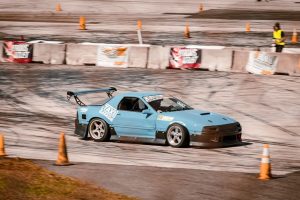
Dirty Air in Motorsport: Why Following Another Car Is So Difficult
Dirty air is the turbulent wake left by a race car. Learn how it reduces downforce, overheats tyres, affects cooling and changes overtaking across different racing series.
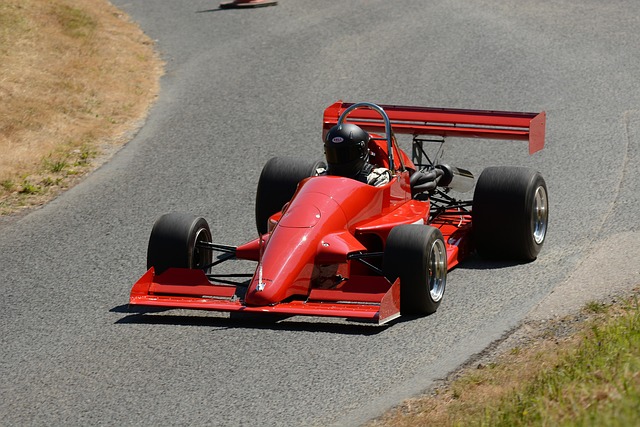
Dirty air in motorsport is the disturbed, turbulent airflow produced behind a moving race car. When the following car enters this wake, its aerodynamic surfaces receive less stable air. The result can be a loss of downforce, reduced cornering grip, higher tyre temperatures and a much harder overtaking battle.
What dirty air does to a following car
A race car creates a large pressure difference between its upper and lower surfaces. Wings, floors, diffusers and other aerodynamic parts use the airflow to generate downforce, pressing the tyres onto the track. That downforce helps the car brake later, turn faster and apply power sooner.
The air leaving the leading car is not smooth. It contains vortices, pressure changes and areas of slower-moving air. A following car’s front wing and floor cannot work as efficiently in this turbulent air in racing. Its aerodynamic balance may also shift, making the car feel unpredictable as the gap changes.
- Less front downforce: the car may understeer, especially at corner entry and through fast bends.
- Reduced total grip: the floor, diffuser and rear wing may produce less aerodynamic load.
- More tyre sliding: small losses of grip can increase surface temperature and wear.
- More cooling difficulty: some cars receive less clean air through their cooling ducts.
- Greater driver workload: the car can change behaviour from one corner to the next.
Dirty air is different from a slipstream. The low-pressure wake can reduce drag and give the following car extra speed on a straight, while the disturbed airflow harms it in corners. This is why a driver may close up at the end of a straight but lose ground again in the next sequence of turns.
Why dirty air makes overtaking harder
A driver usually needs to follow closely through several corners before attempting a pass. Dirty air makes that difficult because the following car loses performance before it reaches the braking zone. It may need to lift earlier, protect its tyres or leave a larger gap to keep the car stable.
The effect is strongest in fast corners, where aerodynamic load is a major part of the available grip. A car that is only a few tenths of a second behind may still be too far away to attack because it cannot maintain the same corner speed as the car in front.
This creates a common racing pattern: the pursuing driver gets close on a straight, struggles in the corners, then falls back before the next passing opportunity. If the gap becomes too large, the following car leaves the turbulent wake and returns to clean air. It handles better, but it may no longer be close enough to overtake.
Dirty air and modern ground-effect race cars
Ground-effect cars generate much of their downforce from airflow beneath the floor. That design can produce strong performance when the airflow remains attached and stable, but the floor may be particularly sensitive to changes in ride height, yaw and turbulence.
Modern aerodynamic rules often try to make a car’s wake less disruptive. Designers may direct vortices and airflow upward or away from the following car, helping it retain more downforce. The objective is not to remove the aerodynamic wake completely; every fast car will disturb the air. The aim is to make close following less damaging.
The exact effect varies by series. Formula cars, sports prototypes, touring cars and stock cars use different body shapes, aerodynamic regulations and tyre designs. A narrow, high-downforce car may be very sensitive to turbulent air, while a car that relies more on mechanical grip may lose less performance in slower corners.
How drivers and teams manage dirty air
Drivers rarely follow directly behind another car for an entire lap if the aerodynamic penalty is severe. They use several practical tactics to preserve performance and create an overtaking chance:
- Leave a small gap before a corner: this gives the car cleaner air for the turn and reduces front-tyre overheating.
- Change the racing line: moving slightly off the wake can restore some front-end response, although it may reduce the grip available from the track surface.
- Attack on a straight: the tow can provide extra speed without exposing the car to as much cornering turbulence.
- Manage tyre temperature: reducing sliding can preserve grip for a later passing attempt.
- Use aerodynamic adjustments: teams may alter wing settings or cooling arrangements during setup and pit stops, depending on the regulations.
Teams also use practice and simulation data to estimate how much performance is lost at different following distances. The best strategy is often not the fastest lap immediately behind another car, but the approach that keeps the tyres healthy and places the driver close enough at the right corner.
Dirty air versus clean air
Clean air in motorsport is relatively undisturbed airflow around a car. It allows the wings, floor and diffuser to operate closer to their intended performance. A car in clean air can usually produce more consistent downforce, protect its tyres more easily and make better use of its aerodynamic setup.
This is why a driver may set faster lap times after passing a rival, even without changing the car. The improvement comes from escaping the aerodynamic wake. It also explains why qualifying pace and race pace can look different: a car may be very fast alone but less effective when it has to follow closely.
Frequently asked questions
Is dirty air the same as turbulence?
They are closely related, but “dirty air” is the racing term for the disturbed wake that affects a following car. Turbulence is one part of that wake, alongside pressure changes, vortices and slower-moving airflow.
Does dirty air always slow the following car?
Not everywhere. The following car can sometimes gain speed from reduced drag on a straight. The main disadvantage appears when it needs stable aerodynamic downforce for braking and cornering.
Why can’t a driver simply move to the side?
Moving out of the wake can improve the airflow, but the alternate line may have less rubber and less grip. It can also be longer, forcing the driver to sacrifice corner entry speed. The best position depends on the circuit and the type of corner.
Can dirty air damage tyres?
It can contribute to tyre wear. Reduced downforce makes the car slide more, while the disturbed airflow can also affect cooling. Repeated sliding raises tyre temperatures and may reduce grip later in the stint.