Left Foot Braking in Racing: How It Works and When to Use It
Left foot braking helps racing drivers manage braking, throttle, balance, and corner entry without moving one foot between the pedals. Learn the technique, its benefits, risks, and how to practise it safely on a track.
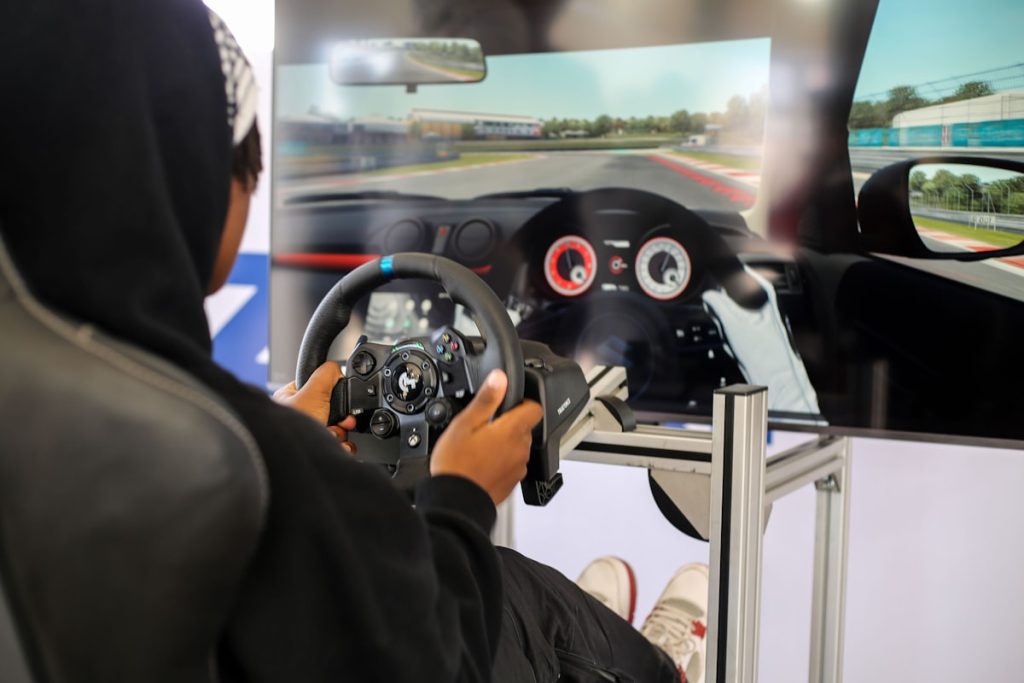
Left foot braking in racing means using the left foot to operate the brake pedal while the right foot controls the throttle. The technique can reduce the time needed to move between pedals and gives the driver more control over the car’s balance during corner entry, low-speed rotation, and traction-limited exits.
It is mainly a track-driving skill. It should be learned in a controlled environment, because an unfamiliar pedal movement can cause accidental braking, throttle application, or loss of vehicle control on public roads.
What left foot braking does in a racing car
Traditional heel-and-toe driving uses the right foot for both the brake and accelerator. Left foot braking separates the pedals: the left foot brakes while the right foot remains ready to apply throttle. This arrangement is particularly useful in cars with automatic, sequential, or paddle-shift transmissions, where a clutch pedal may not be needed during normal cornering.
The main purpose is not simply to brake earlier. A driver uses small, precise brake inputs to influence the car’s weight transfer and attitude. Braking shifts load toward the front tyres, which can help the car turn. Releasing the brake smoothly then allows the car to settle before acceleration.
Why racing drivers use the technique
- Faster pedal transitions: The driver does not need to move the right foot from the throttle to the brake and back again.
- Better car balance: Light brake pressure can keep weight over the front tyres during corner entry.
- Throttle and brake overlap: In some corners, a controlled overlap helps manage traction and the car’s rotation.
- Quicker response: The driver can cover the brake while maintaining a stable throttle position in situations that require rapid correction.
- Useful in short braking zones: The technique can be valuable where a corner arrives quickly after acceleration.
These advantages depend on the car, circuit, tyres, and driver. In a manual car, the left foot may still be needed for the clutch, so left foot braking is less practical during shifts unless the driver has a specific reason and enough space to operate both pedals accurately.
How to learn left foot braking
Start at low speed on a closed circuit or suitable driving facility. Before driving, check the pedal spacing and seating position. Your legs should be stable, and your heel should be supported well enough to make small pressure changes without locking the knee or ankle.
- Practise pedal feel: With the car stationary and safely secured, identify the brake pedal’s travel and resistance. Do not rely on visual checking while driving.
- Use gentle straight-line braking: At low speed, apply the brake with the left foot using less pressure than you might initially expect. The left foot often has little learned sensitivity because it has not been used for braking.
- Repeat consistent stops: Focus on smooth pressure rather than maximum braking force. The car should slow without a sharp nose dive or abrupt release.
- Add simple corner entries: Once the pedal action is consistent, practise braking in a straight line and carrying a light, steady pressure toward the turn-in point.
- Increase speed gradually: Only progress when your braking points, pedal pressure, and steering inputs remain repeatable.
Keep the first sessions deliberately slow. A racing brake pedal may require significant force, while a road-car pedal can be more sensitive. The goal is accurate modulation, not learning to stamp on the pedal with the left foot.
Left foot braking versus right foot braking
Right foot braking remains the simplest choice for ordinary road driving and for many racing situations. It works well when there is enough time between throttle and brake use, when the car has a manual gearbox, or when the driver is still building basic braking consistency.
Left foot braking can be more effective in a racing car with a sequential gearbox or automatic transmission, especially in karts, rally cars, touring cars, and some single-seaters. The best method depends on the vehicle rather than on a universal rule. A technique that is fast in a rally car may provide little benefit in a circuit car with long braking zones.
| Situation | Potentially suitable technique | Reason |
|---|---|---|
| Long braking zone before a corner | Right foot braking or left foot braking | There is usually enough time for a deliberate pedal transition. |
| Short corner sequence | Left foot braking | The right foot can stay prepared for throttle control. |
| Manual gear change under braking | Right foot braking with heel-and-toe | The left foot may be required for clutch operation. |
| Low-speed learning session | Either method | Consistency and safety matter more than theoretical speed. |
Common mistakes and risks
The most common error is pressing too hard because the left foot has not developed the same sensitivity as the right. This can unsettle the car, trigger ABS, or cause unnecessary loss of speed. Another mistake is holding brake pressure too long into a corner without understanding how the extra front load affects rear grip.
Drivers should also avoid forcing brake and throttle overlap simply because it is associated with professional racing. Overlap must have a clear purpose, such as stabilising the car or managing traction. If it makes the engine fight the brakes or creates inconsistent corner entries, it is not helping.
Do not practise the technique in traffic. A mistake can produce an unexpected deceleration or cause the driver to confuse the pedals. On a track, use an instructor or experienced coach where possible, leave a margin for error, and make changes one at a time.
Does left foot braking make a driver faster?
It can, but the gains usually come from improved consistency and car control rather than from a dramatic reduction in pedal-travel time. A driver who is still missing braking points, releasing the brake abruptly, or entering corners too quickly will not solve those problems by changing feet.
For most drivers, the priority should be a repeatable braking reference, a smooth release, accurate steering, and an early but controlled return to throttle. Left foot braking becomes useful after those fundamentals are reliable and the car’s layout gives the technique a practical advantage.
Frequently asked questions
Is left foot braking difficult to learn?
The basic movement is easy to understand, but accurate pressure control takes practice. The left foot is usually less precise on the brake, so low-speed repetition is essential.
Can you use left foot braking in a manual race car?
Yes, but the clutch may limit when it is practical. Drivers commonly use the left foot for the clutch during gear changes and the right foot for braking, while using left foot braking only in situations where the clutch is not required.
Do rally drivers use left foot braking?
Many rally drivers use it because rapid transitions, loose surfaces, and tight corners can make simultaneous throttle and brake control valuable. The exact technique varies with the car, surface, drivetrain, and corner.
Should a road driver learn left foot braking?
It is generally unnecessary for normal road driving. The technique is best practised in a controlled motorsport environment, while road drivers should prioritise smooth, predictable braking with the method they can use reliably.