Formula E vs Formula 1: What Is the Difference?
Formula 1 and Formula E are both elite single-seater championships, but they differ in powertrains, circuits, race strategy, performance, sound, and sporting format. Here is how they compare.
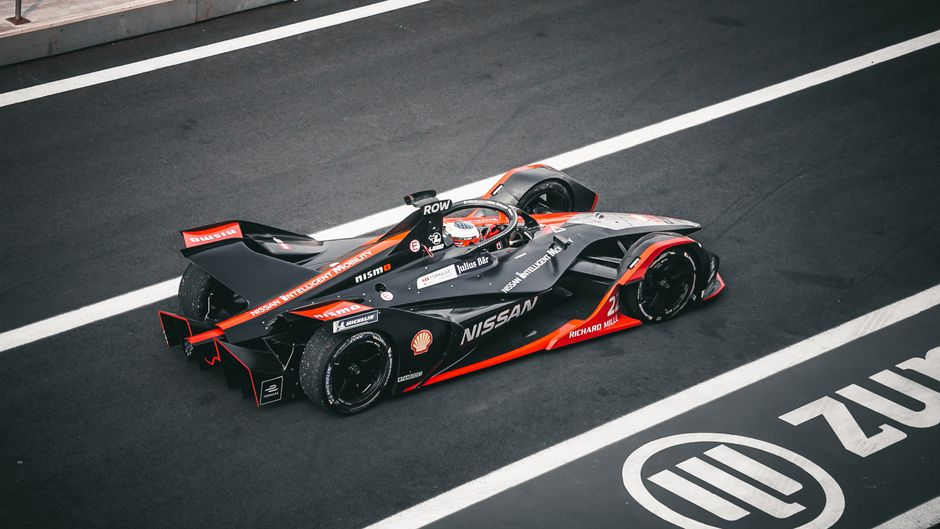
Formula E vs Formula 1 is not simply a comparison between electric and petrol-powered cars. The two championships use different technical rules, race environments, sporting formats, and performance priorities. Formula 1 focuses on maximum speed and aerodynamic development, while Formula E is built around electric efficiency, close racing, and competition in city-centre circuits.
Both series feature purpose-built single-seaters and professional drivers, but a Formula E car is not designed to imitate a Formula 1 car. Each championship rewards a different approach to engineering and racecraft.
Formula E and Formula 1 compared
| Area | Formula 1 | Formula E |
|---|---|---|
| Powertrain | Hybrid turbocharged petrol engine with electric systems | Fully electric powertrain |
| Typical venues | Permanent circuits and some street circuits | Mainly temporary urban street circuits |
| Main performance focus | High speed, aerodynamic grip, and lap time | Energy management, efficiency, and close combat |
| Race sound | Loud combustion-engine and exhaust note | Electric motor whine, tyre noise, and braking sounds |
| Race format | Usually a fixed-distance or time-limited Grand Prix | Energy-limited races with series-specific sporting features |
| Development emphasis | Aerodynamics, engine performance, tyres, and vehicle dynamics | Electric motors, inverters, software, batteries, and energy recovery |
Power and speed: Formula 1 has the advantage
Formula 1 cars are generally faster over a full lap and have a higher top speed. Their hybrid power units combine a turbocharged internal-combustion engine with motor-generator systems that recover and deploy electrical energy. Sophisticated aerodynamics create substantial downforce, allowing the cars to carry high speed through fast corners.
Formula E cars use electric motors powered by a battery. They do not produce the same top speed or aerodynamic cornering performance as current Formula 1 cars, but their acceleration is highly competitive. On a short street circuit, the difference in lap time can be less meaningful because Formula E races take place on tighter tracks with slower corners and limited run-off areas.
A comparison based only on maximum speed misses the main engineering challenge in Formula E. Drivers and teams must manage the available energy across the race while preserving tyre performance and choosing the right moments to attack. The fastest lap is not always the most useful lap if it creates an energy disadvantage later.
How the racing differs
Formula 1 races usually reward qualifying performance, aerodynamic stability, tyre management, and pit-wall strategy. Track position can be extremely valuable, especially on circuits where overtaking is difficult. Pit stops are normally used for tyre changes rather than refuelling, and teams make strategic decisions around tyre compounds, weather, safety cars, and degradation.
Formula E racing is often more compact and position changes can happen quickly. The narrow layouts and close performance between cars create frequent battles, but the races also require patience. Drivers may lift off the accelerator, use regenerative braking, or sit in a slipstream to conserve energy. An aggressive move early in the race can leave a driver vulnerable near the finish.
Formula E has also used features such as Attack Mode and, in some seasons, fan-related power-boost formats. These rules can change how drivers select overtaking opportunities and defend positions. The precise format can vary, so the current sporting regulations are the best source for a particular race weekend.
Street circuits versus traditional Grand Prix tracks
Formula 1 competes at a mixture of permanent racing circuits and street venues. Its calendar includes tracks with long straights, high-speed corners, elevation changes, and extensive run-off areas. These conditions allow the aerodynamic efficiency of the cars to become a major factor.
Formula E is strongly associated with temporary city-centre circuits. They are usually shorter, tighter, and more technical than Formula 1 layouts. Barriers sit close to the track, braking zones can be uneven, and the surface may offer less grip. These characteristics put more emphasis on precision, visibility, low-speed traction, and avoiding contact.
The different venues explain why a Formula E car can look less spectacular on a straight but still produce intense racing. A lap is not judged by speed alone; the circuit determines which strengths matter most.
Technology and the role of electric racing
Formula 1 remains a hybrid championship rather than a fully petrol-powered series. Its cars recover energy under braking and from the turbocharging system, then deploy that electrical energy for performance. The technology is closely tied to aerodynamic development, cooling, fuel efficiency, tyres, and engine reliability.
Formula E makes the electric powertrain the central competition. Teams work on the electric motor, transmission, inverter, control software, braking integration, and energy recovery. Battery development is regulated, but efficiency and power delivery still have a direct effect on race results. The championship therefore tests technologies that are more closely associated with electric road vehicles.
Neither series is completely free of environmental impact. A credible comparison should include freight, event operations, manufacturing, electricity sources, fuel use, and the lifespan of components. Formula E reduces tailpipe emissions at the circuit because its cars have no exhaust emissions during racing, but that does not make the entire championship impact-free. Formula 1 is also developing lower-carbon fuels and more efficient hybrid technology.
Which series is more exciting to watch?
The answer depends on what you value in motorsport. Formula 1 is the stronger choice for very high speeds, dramatic qualifying laps, complex aerodynamics, global heritage, and the visual scale of a Grand Prix weekend.
Formula E may appeal more to viewers who prefer close street racing, frequent wheel-to-wheel battles, unusual strategy, and electric vehicle technology. Its lower noise level also makes urban events easier to stage near city centres, although some fans prefer the sound and spectacle of combustion engines.
It is also worth separating racing quality from vehicle speed. Formula 1 cars are faster, but a faster car does not automatically create more overtaking. Formula E’s technical and sporting rules are designed around energy limits and close competition, which can produce a different kind of uncertainty.
Frequently asked questions about Formula E vs Formula 1
Is Formula E faster than Formula 1?
No. Formula 1 cars are generally faster in top speed, acceleration in many conditions, and lap time. Formula E cars can be very quick, particularly in acceleration and on tight street circuits, but their overall performance is lower than that of a modern Formula 1 car.
Do Formula E cars use petrol?
No. Formula E cars are powered entirely by electricity during a race. They use batteries, electric motors, power electronics, and regenerative braking rather than a petrol engine.
Why does Formula E race in cities?
Urban circuits help bring electric motorsport close to large audiences and highlight the practical relevance of electric vehicle technology. Their compact layouts also create a different racing challenge from the high-speed permanent circuits commonly used by Formula 1.
Which is harder to drive, Formula 1 or Formula E?
They demand different skills. Formula 1 places heavy demands on high-speed commitment, aerodynamic sensitivity, braking, physical endurance, and tyre management. Formula E requires precise energy management, close-quarter positioning, regeneration control, and adaptability to low-grip street surfaces. There is no simple ranking of difficulty.
Can a Formula E driver compete in Formula 1?
Yes. Drivers can move between championships if they meet the relevant licensing and team requirements. However, adapting to Formula 1 involves learning different tyres, aerodynamics, braking demands, race procedures, and car behaviour. Experience in one series does not guarantee immediate success in the other.