Le Mans Car Classes Explained: Hypercar, LMP2 and LMGT3
Understand the current Le Mans car classes, how Hypercar, LMP2 and LMGT3 differ, and why several categories race together for the overall win and class victories.
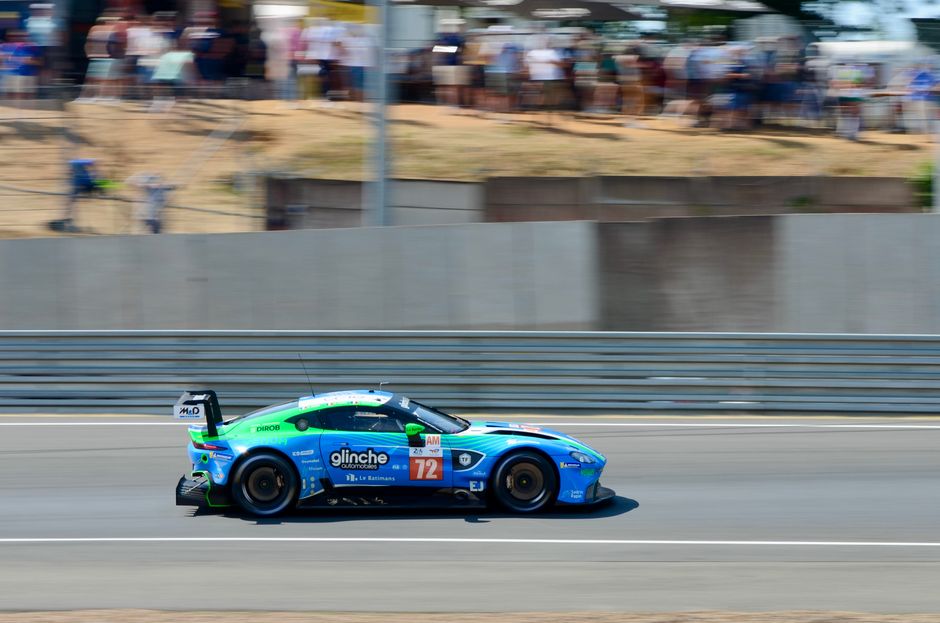
The 24 Hours of Le Mans uses a multi-class format, so cars with very different speeds compete on the circuit at the same time. The modern Le Mans car classes are Hypercar, LMP2 and LMGT3. Hypercar is the fastest category and fights for the overall victory, while LMP2 and LMGT3 compete for their own class wins.
The simplest way to identify them is by purpose: Hypercars are the headline prototypes, LMP2 cars are more standardized racing prototypes, and LMGT3 cars are based on production sports cars. Each class has its own technical rules, performance targets and driver requirements.
The current Le Mans car classes
| Class | What it is | Main contest |
|---|---|---|
| Hypercar | Top-level closed-cockpit prototypes built under LMH or LMDh regulations | Overall race victory and Hypercar honours |
| LMP2 | Prototype racers with more standardized technical components | LMP2 class victory |
| LMGT3 | Race cars based on production sports cars and adapted for endurance racing | LMGT3 class victory |
Hypercar
Hypercar is the premier category at Le Mans. These cars are purpose-built endurance prototypes, meaning they are designed primarily for racing rather than adapted from a road car. They have enclosed cockpits, advanced aerodynamics and hybrid systems, although the precise technology depends on the regulations and manufacturer.
Two technical routes are accepted in the top class: Le Mans Hypercar (LMH) and Le Mans Daytona h (LMDh). Both are balanced to compete together, so a manufacturer does not automatically gain an advantage simply by choosing one design philosophy over the other. The rules are intended to control performance and encourage close racing between different concepts.
Hypercar entries are the cars most likely to appear in overall qualifying battles and the fight for the overall Le Mans win. Their lap-time advantage comes from greater aerodynamic performance, more sophisticated hybrid and powertrain systems, and a higher technical ceiling than the lower categories.
LMP2
LMP2 stands for Le Mans Prototype 2. It is a dedicated prototype class positioned below Hypercar. LMP2 cars are visibly similar to other endurance prototypes because they have closed cockpits and aerodynamic bodywork, but the category uses more standardized equipment to limit costs and keep the competition focused on teams and drivers.
The class uses a common Gibson engine, and the Oreca 07 is the dominant chassis used by LMP2 teams. That standardization makes an LMP2 car less technologically complex than a Hypercar, but it remains a fast and demanding prototype capable of producing intense class racing over a full day and night.
At Le Mans, LMP2 may also be divided into a regular LMP2 category and LMP2 Pro/Am. The Pro/Am designation reflects the driver line-up and sporting rules rather than a completely different type of car. Driver classifications are a major part of endurance racing, with professional, silver-rated and bronze-rated competitors assigned according to experience and performance criteria.
LMGT3
LMGT3 is the production-based category in the modern Le Mans field. Cars such as GT3 versions of familiar road-going sports cars are heavily modified for racing, receiving competition suspension, brakes, aerodynamic parts, safety equipment and endurance-focused electronics.
Unlike a prototype, an LMGT3 car retains a strong visual and technical link to a road car. This makes the category easier to recognize: the cars have familiar silhouettes, front-engined or mid-engined layouts depending on the model, and bodywork shaped around an existing production design.
LMGT3 performance is controlled with Balance of Performance, often shortened to BoP. The system can adjust factors such as weight, power or other performance parameters so that different vehicle concepts can compete more fairly. It does not make every car identical, but it aims to prevent one model’s basic design from creating an unavoidable advantage.
How the classes race together
All three categories share the same circuit, but they do not have the same pace. A Hypercar may be fighting for the overall lead while passing an LMP2 or LMGT3 car that is focused on its own class position. This creates one of the central challenges of the 24 Hours of Le Mans: drivers must manage traffic without losing time or taking unnecessary risks.
The fastest cars are not always the cars that look most dominant at every moment. Traffic, weather, safety-car periods, pit stops, driver changes, tyre performance and reliability can reshape the order. A slower class car can also affect the outcome of a Hypercar battle if the timing of a pass costs one leader more time than another.
Overall winner versus class winner
The overall winner is the car that completes the greatest distance, or is classified highest under the race regulations, across the entire field. In practice, the leading Hypercar entries normally contest this result because they are the fastest class.
Class victories are separate achievements. An LMP2 team can win LMP2 without challenging for the overall result, while an LMGT3 team can win its category despite finishing behind every Hypercar and LMP2 entry. Endurance racing therefore produces several meaningful winners from the same race.
How to tell Le Mans classes apart
- Hypercar: sleek, low prototypes with enclosed wheels and highly sculpted aerodynamic bodywork. Manufacturer-specific designs can look very different from one another.
- LMP2: prototype-shaped cars with less manufacturer-specific styling and a more uniform appearance, often based on the Oreca 07 design.
- LMGT3: recognizable sports-car shapes, including familiar headlights, grilles and rooflines adapted from production models.
Timing graphics and broadcast overlays usually identify the class with a colour or abbreviation. The exact colours can vary by broadcast package, so the car number, class label and body shape are safer clues than colour alone.
Why Le Mans uses multiple classes
A multi-class field allows different types of racing cars to compete in the same endurance event. Manufacturers can use the top class to showcase technology, private teams can compete with controlled-cost LMP2 machinery, and GT3 manufacturers can race cars connected to their showroom products.
The format also creates more opportunities for teams and drivers. Winning Le Mans is not limited to the overall result: a class victory rewards preparation, consistency, pit work and traffic management against rivals using the same technical rules.
Frequently asked questions about Le Mans classes
Which is the fastest Le Mans class?
Hypercar is the fastest class and the category that normally competes for the overall 24 Hours of Le Mans victory.
Are LMH and LMDh separate Le Mans classes?
No. LMH and LMDh are two technical rule sets within the top Hypercar category. Their performance is regulated so that cars built under either formula can race together.
Are LMP2 cars faster than LMGT3 cars?
Generally, yes. LMP2 is a purpose-built prototype class and normally has a higher outright pace than LMGT3. The exact gap can change with the circuit, weather and Balance of Performance settings.
Can a GT3 car win Le Mans overall?
Under the current class structure, LMGT3 cars compete for the LMGT3 class victory rather than the overall win. Their race is judged against other cars in the same category.
Why do some cars have professional and amateur drivers?
Endurance racing uses driver categories to create sporting opportunities for teams with different budgets and line-ups. Driver ratings help determine which combinations are permitted in classes such as LMGT3 and LMP2 Pro/Am.