BoP Racing Explained: How Balance of Performance Works
Balance of Performance, or BoP, is used in several racing categories to keep different cars competitive. Learn how it works, which factors are adjusted, and why teams sometimes criticize it.
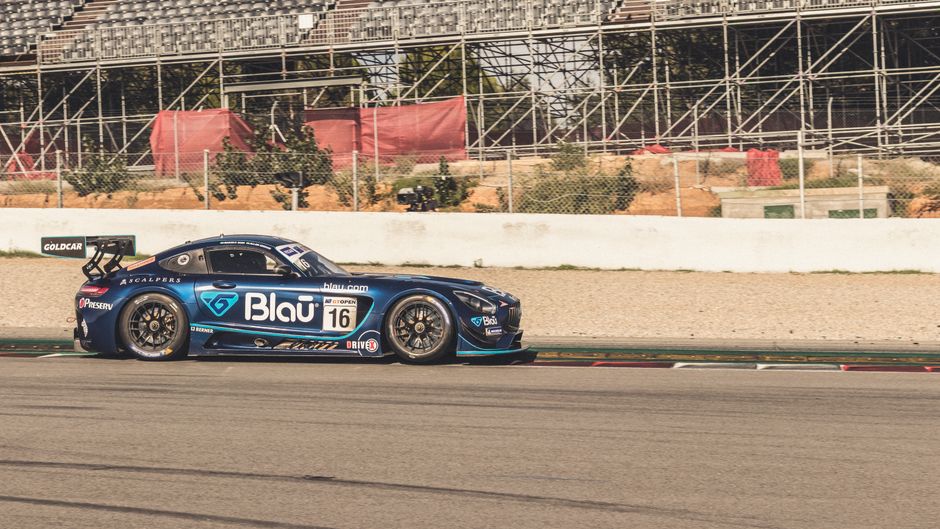
BoP racing explained: Balance of Performance is a rule system that adjusts the performance of different car models so they can compete more closely in the same class. Organizers may change a car’s weight, power, fuel capacity, ride height, or other parameters instead of requiring every manufacturer to build an identical machine.
BoP is most closely associated with production-based categories such as GT3, GT4, the FIA World Endurance Championship, IMSA sports car racing, and other multi-brand championships. The aim is not to make every car behave identically. It is to prevent one design’s natural advantages from deciding the result before the race begins.
What does Balance of Performance mean?
Different racing cars can be fast for different reasons. One may have a powerful engine, another may generate more cornering grip, and a third may be especially efficient with fuel or tyres. Even when they follow the same technical rules, their layouts and designs create different strengths.
A BoP system attempts to narrow those differences. If data suggests that one model has a meaningful advantage, the governing body can apply a correction before the next event. The adjustment is usually made to the car’s permitted specification rather than through an in-race handicap.
That means BoP is not the same as adding ballast to a car after every overtaking move or slowing the leader during a race. It is normally a pre-event regulatory process based on testing, previous race data, simulation, and track characteristics.
How BoP adjustments work
The exact rules vary by championship, but common Balance of Performance adjustments include:
- Minimum weight: Additional weight can reduce acceleration, braking performance, and tyre life. Removing weight can provide the opposite effect.
- Engine power: Organizers may alter power through an air-restrictor size, turbocharger boost, engine mapping, or another permitted control.
- Fuel capacity or fuel flow: Changes can affect stint length, pit-stop timing, and the amount of fuel a car can use during a race.
- Ride height and aerodynamic limits: Adjustments can reduce or increase a car’s aerodynamic advantage, particularly on circuits where downforce is decisive.
- Tyre specifications: Some series use tyre allocation or compound rules as part of their performance-control system, although tyres are not always formally classed as BoP.
- Restrictor or boost changes: These limit how much air reaches the engine or how much pressure a turbocharged engine can produce.
A series may combine several small changes rather than relying on one large penalty. The goal is to correct the performance window without making the car unreliable or changing its character completely.
How organizers decide the racing BoP
BoP officials examine more than the fastest lap from a race. Useful information can include qualifying pace, average lap times during clear track, stint performance, tyre degradation, fuel use, weather conditions, traffic, driver line-ups, and the amount of time a car spends in the pit lane.
Data from multiple circuits is usually more valuable than a single result. A car that is strong on a high-speed track may be less effective on a tight circuit. Organizers therefore try to avoid reacting to one unusual race or to performance that was mainly caused by strategy, safety-car timing, or driver execution.
Some championships use a formal algorithm, while others rely on a technical committee that reviews data and consults manufacturers. The details may be confidential because publishing every calculation could encourage teams to optimize specifically for the measurement process.
Why GT3 and endurance racing use BoP
GT3 racing is a major example of a category built around Balance of Performance. Cars from different manufacturers can use different engine positions, cylinder counts, body shapes, and aerodynamic concepts. Without a balancing system, one model could become substantially more competitive while still meeting the basic GT3 regulations.
Endurance racing adds further complications. A car must manage fuel consumption, tyre wear, traffic, driver changes, and reliability over several hours. A model that is not the fastest over one qualifying lap may be highly effective during a long stint. This is why BoP analysis in endurance events must consider race pace and efficiency rather than headline lap time alone.
In the FIA WEC, IMSA, and other sports car series, the technical rules and BoP tables can differ. A car’s permitted configuration in one championship does not automatically apply in another. The same model may receive different adjustments because the tyre supplier, circuit calendar, fuel, sporting regulations, and race format are different.
What BoP does not do
Balance of Performance does not guarantee identical lap times or equal results. Driver skill, setup quality, pit stops, traffic management, tyre preparation, reliability, and race strategy still matter. A well-balanced class can contain cars that perform differently across qualifying, wet conditions, long stints, and high- or low-grip circuits.
BoP also does not remove engineering competition. Teams still work on suspension setup, aerodynamics within the permitted limits, tyre usage, braking, cooling, reliability, and operational efficiency. The system limits the largest design advantages, but it does not make every car technically interchangeable.
Why teams criticize Balance of Performance
Manufacturers and teams generally support close racing, but BoP becomes controversial when an adjustment appears to reward or punish a car unfairly. Common concerns include:
- Data limitations: A small sample of races may not reveal a car’s true potential.
- Track dependence: A correction that works at one circuit may be too strong or too weak elsewhere.
- Driver differences: Results can reflect the strength of a driver line-up rather than the car alone.
- Sandbagging concerns: Competitors may fear that a manufacturer is hiding performance before a BoP decision.
- Unclear adjustments: Teams may struggle to understand why a change was made if the governing body does not publish its full methodology.
- Reduced design freedom: Engineers may feel that technical innovation is being replaced by regulatory intervention.
These disputes are part of the difficulty of balancing cars without creating a new incentive to manipulate the data. A credible system needs consistent measurement, transparent principles, and enough information for competitors to trust the process.
BoP versus equal cars and handicaps
BoP is different from a one-make championship. In a one-make series, competitors use cars that are designed and supplied to a common specification. BoP allows multiple manufacturers and fundamentally different vehicle designs to race together.
It is also different from success ballast. Success ballast adds weight because of a driver’s or team’s previous result, usually to prevent one competitor from dominating several events. BoP is intended to address differences between car models or technical concepts, not simply to penalize the current championship leader.
Handicap systems can also adjust a car’s performance after a result, while BoP is generally set before an event or competition period. The terminology varies between series, so the sporting regulations should be checked before assuming that every weight or power change is a BoP measure.
Frequently asked questions about BoP racing
Does BoP make racing artificial?
It does introduce a regulatory intervention, but the alternative may be a class where one design has a large and persistent advantage. Supporters see BoP as a way to preserve multi-manufacturer competition; critics argue that it can conceal the real performance gap between cars. Its value depends on how accurately and transparently it is administered.
Can BoP change during a season?
Yes. Some championships publish event-specific tables, while others use a fixed window or restrict when adjustments can be made. Changes may respond to accumulated data, technical updates, or differences between circuits. The applicable sporting and technical regulations determine the process.
Is the fastest car always the one with the best BoP?
No. A car’s result depends on setup, tyres, drivers, pit work, reliability, traffic, weather, and strategy. BoP tries to control the potential of the underlying car, but it cannot eliminate every competitive variable.
Is BoP used in Formula 1?
Formula 1 does not use GT-style BoP to equalize different manufacturers’ cars. Its technical regulations apply common limits to areas such as aerodynamics, power units, tyres, and minimum weight, but teams are expected to develop their own solutions within those rules.
In practical terms, BoP racing means that car design remains part of the competition while the governing body tries to prevent one model from gaining an overwhelming advantage. The system works best when its decisions are based on broad evidence and when teams believe that the same standards apply to every manufacturer.