Rally Pace Notes Meaning: How Drivers Read the Road at Speed
Rally pace notes are a shared language between the co-driver and driver. Learn what corner numbers, direction calls, distances and cautions mean during a stage.
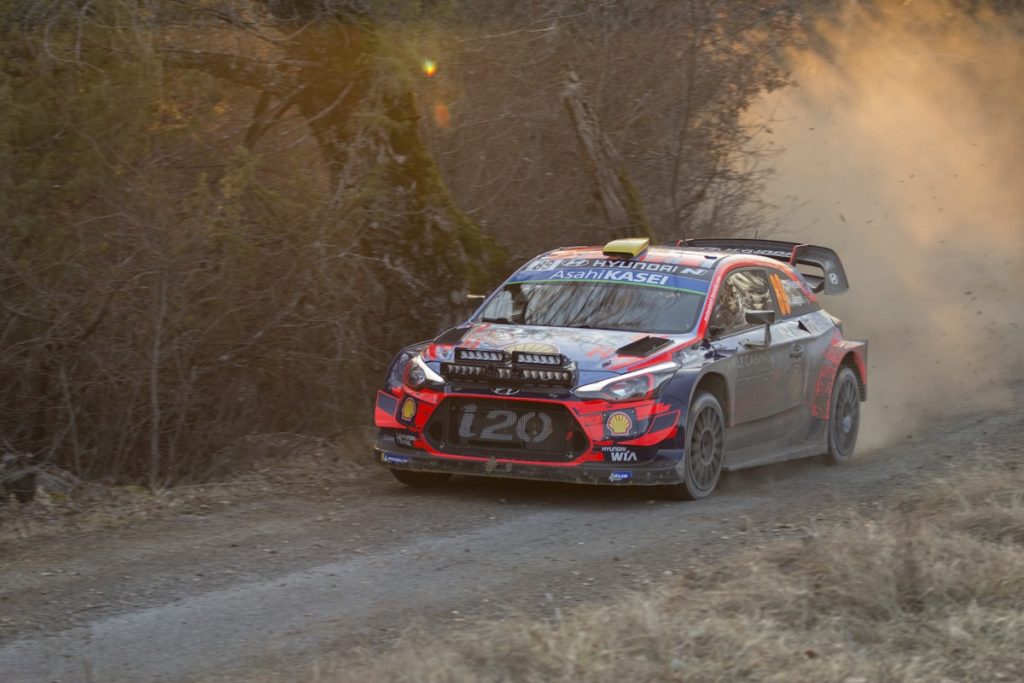
Rally pace notes are shorthand instructions that tell a driver what the road is about to do. The co-driver reads the notes aloud while the driver uses them to judge corners, crests, jumps, surface changes and hazards without relying only on what is visible through the windscreen.
The exact wording is not universal. Each crew may use a slightly different system, but the underlying purpose is the same: turn a reconnaissance description into a sequence of accurate, timed decisions.
What rally pace notes mean
A pace note normally describes several features of the road in a compact call. A typical instruction might be:
“Left 4, over crest, 80, right 2 tightens, don’t cut.”
That could mean a medium-speed left-hand corner, followed by a crest, then an 80-metre run into a slower right-hand corner that becomes tighter. The warning not to cut tells the driver to keep the inside wheels away from the road edge, perhaps because of a ditch, rock or exposed ground.
Rally notes are usually written during reconnaissance, often called recce. The driver and co-driver travel through the stage at a controlled speed and record the road’s shape, surface and hazards. They then refine the notes so the calls match the crew’s preferred terminology and the car’s performance.
How the numbers in pace notes work
Corner numbers usually describe severity or speed, not a fixed angle. In a commonly used six-point system, a 1 is the tightest and slowest corner, while a 6 is the fastest and most open. Other crews use a one-to-five scale, a one-to-ten scale or descriptive words such as “hairpin,” “square” and “fast.”
Because the scale differs between teams, a “4 right” does not have one universal speed. The driver learns what that call means in the current car, on the current surface and within that crew’s note system. A corner that feels fast on dry tarmac may require a much slower approach on gravel, snow or wet mud.
Direction is normally given as left or right. Modifiers add detail:
- Opens means the corner becomes less severe after its entry.
- Tightens means it becomes sharper, often requiring the driver to delay acceleration.
- Long indicates that the corner continues for an extended distance.
- Hairpin describes a very tight turn, often close to 180 degrees.
- Square commonly indicates a corner close to a right angle.
- Don’t cut warns against using the inside verge or shortcutting across the apex.
Distances, crests and hazards
Distance calls tell the driver when the next feature arrives. A note such as “50” may mean the next instruction is approximately 50 metres away, while “into” or “immediate” indicates that the following corner comes almost directly after the first one. The crew agrees how distances are expressed before the stage, so the driver knows whether a number refers to metres, car lengths or another convention.
A crest is a rise that can reduce visibility or lighten the car. Pace notes may indicate whether the road continues straight, turns immediately after the crest or contains a jump. Calls such as “over crest,” “jump,” “bump” and “dip” help the driver prepare the car’s weight transfer and landing.
Hazard terms are equally important. Notes may warn about rocks, poles, bridges, water splashes, ditches, spectator areas, cattle grids or a narrowing road. A hazard call does not always mean the feature is dramatic; it means the driver should account for it before committing to the corner or acceleration zone.
How the co-driver and driver use the notes
The co-driver must deliver each call early enough for the driver to react, but not so early that it is forgotten among several instructions. The rhythm changes with speed and road complexity. A fast section may require a continuous stream of short calls, while a technical section may use more detail and tighter timing.
The driver does not simply follow the words mechanically. Pace notes provide a prediction of the road, while the driver still checks grip, weather, visibility and the car’s behaviour. If conditions change after reconnaissance, the crew may need to reduce speed even when the written note has not changed.
Good notes also communicate how features connect. “Right 5 into left 3” means the first corner affects the approach to the second. A call such as “left 4 over crest, tightens” gives the driver information about both the initial entry and the later demand inside the same corner.
Why rally pace notes are not a universal code
People searching for a rally pace notes dictionary often expect one fixed translation for every number and phrase. In practice, terminology varies by country, championship, language, driver and co-driver. Even two crews using the same numerical scale may assign different speed expectations to the same call.
The reliable meaning comes from the crew’s own recce process and practice. Drivers may use descriptive notes instead of numbers, while experienced teams add information about camber, braking, surface grip and the best line. Some systems also include calls for junctions, route changes and intersections with other roads.
That variation is why pace notes should not be copied from another crew and treated as ready-made instructions. They are a communication system built around a specific driver, co-driver, car and stage.
Common questions about rally pace notes
Who writes the pace notes?
The driver and co-driver usually create them together during reconnaissance. The driver describes what the road feels like and what information is useful, while the co-driver records and organizes the wording.
Does a higher corner number always mean faster?
Only within systems that use higher numbers for more open corners. The scale is not universal, so the crew must agree on its meaning before competition.
Can a rally driver compete without pace notes?
Some rallies or stages may be driven from memory or with limited information, but modern stage rallying commonly depends on pace notes. They allow the driver to prepare for features that cannot be seen early enough at competition speed.