Meaning of CF in Football: Position, Role and Difference from a Striker
CF usually means centre forward in football. Learn where the position sits, what a centre forward does, and how it differs from a striker, second striker and attacking midfielder.
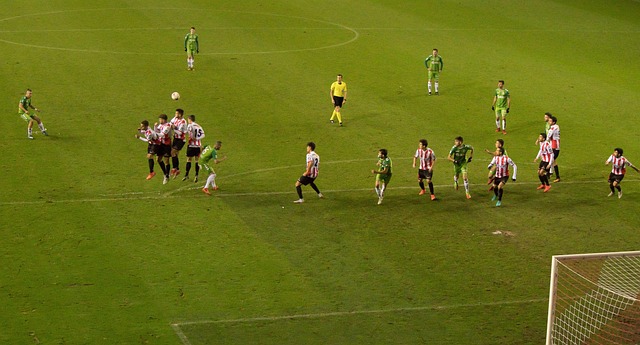
In football, CF usually means centre forward. It describes an attacking player positioned centrally and close to the opponent’s goal. The abbreviation appears in team formations, player profiles, match analysis and football video games.
The exact duties of a CF depend on the team’s formation and tactics. A centre forward may act as the main goalscorer, drop into midfield to link attacks, hold the ball for teammates or move into wider areas to create space.
What does CF mean in football?
CF stands for centre forward, also written as center forward in American English. The position is located in the middle of the attacking line, between or just ahead of the attacking midfielders and in front of the opposing defenders.
A centre forward’s usual objectives are to:
- finish chances inside and around the penalty area;
- occupy central defenders and create space for teammates;
- receive passes with their back to goal;
- combine with wingers and attacking midfielders;
- press the opposition’s defenders during defensive transitions.
These responsibilities make the CF a tactical role rather than a description of one fixed style. Two centre forwards can play in the same position while having very different instructions.
What does a centre forward do?
Finishing attacks
The most familiar centre forward role is to convert chances. This includes finishing crosses, through balls, cutbacks, rebounds and shots created after pressing or combination play. A CF does not have to touch the ball frequently to be effective; intelligent movement can be just as valuable as possession.
Linking play
Many centre forwards drop toward midfield to receive the ball and connect the attack. They may protect possession, lay the ball off to a teammate or turn and carry it toward goal. This is often called a link-up striker or target forward function, depending on how the player operates.
Creating space
A CF can pull a defender away from the centre by moving toward a flank or dropping between the defensive and midfield lines. That movement may open a channel for a winger, attacking midfielder or overlapping full-back. In this situation, the centre forward contributes to an attack even without taking the final shot.
Pressing and defensive work
Modern centre forwards are often the first line of pressure. Their positioning can block a pass into the opposition’s defensive midfielder while directing play toward one side of the pitch. The quality of this pressing depends on timing, stamina and coordination with the forwards behind them.
CF compared with other attacking positions
The terms overlap, so a player listed as a CF may perform several related roles. The formation and manager’s instructions provide more information than the abbreviation alone.
CF and striker
Striker is a broad term for an attacking player whose main task is to threaten and score goals. A centre forward is one common type of striker, but the two terms are not always identical. “Striker” often emphasizes the player’s attacking function, while “CF” identifies a central position on a team sheet or player database.
CF and number 9
A number 9 traditionally refers to the team’s central goalscoring forward. In many systems, the number 9 is the CF. However, a modern CF may drop deep or move wide more often than the traditional penalty-box striker associated with the number.
CF and second striker
A second striker normally plays behind or beside the main centre forward. This player has more freedom to drift into midfield, combine with the CF and attack spaces around the penalty area. In a two-forward system, one player may be listed as CF while the other is shown as SS, or both may be labelled forwards depending on the source.
CF and centre attacking midfielder
A centre attacking midfielder, often abbreviated as CAM, usually starts farther from goal and operates between midfield and attack. A CF begins higher up the pitch and has more direct responsibility for occupying the defensive line and finishing moves. A false nine can blur this distinction by dropping into the attacking midfield area.
How CF appears in football formations
In a 4-3-3 formation, the CF is commonly the lone central forward between two wingers. The player may stay high to stretch the defence or drop deep while a winger runs into the space ahead.
In a 4-2-3-1 formation, the CF is usually the single striker, with a central attacking midfielder behind them. The forward may play as a target for direct passes or combine with the number 10.
In a 4-4-2 formation, two forwards share the attack. One may act as a centre forward who holds the ball and occupies defenders, while the other plays closer to the spaces around them. Both players can still be described as strikers in general language.
In a 4-3-1-2 or similar narrow system, a CF may operate alongside another forward and receive support from a central attacking midfielder. In these formations, movement and role instructions matter more than the label shown beside the player.
CF in football games and player databases
Football games and statistics websites use CF as a position label to organize player ratings and tactical line-ups. A player listed as CF may also have secondary positions such as ST, SS, LW or CAM. Those labels indicate where the player can be used, not necessarily the role they perform best in every tactical setup.
For example, a CF with strong finishing and positioning may suit a central scoring role, while a CF with passing, dribbling and vision may be more effective as a false nine. Ratings, instructions and surrounding players determine how the position works in practice.
Common misunderstandings about the CF position
CF does not always mean the team’s best goalscorer. A winger or attacking midfielder may score more goals in a particular system, especially if the CF creates space or supplies assists.
CF is not automatically the same as CAM. Both players can receive the ball centrally, but the CF generally starts closer to the opposition goal and is more directly connected to the final line of attack.
A CF does not have to stay in the centre. Tactical movement can take the player into the half-spaces or wide channels. The position describes the starting area and primary function, not every location the player occupies during a match.
Frequently asked questions about CF in football
Is CF the same as ST?
Usually, the terms are closely related. CF means centre forward and describes a central attacking position, while ST means striker and usually emphasizes the player’s goalscoring role. Football games and websites may use either label for a similar player.
What number is a CF in football?
A CF is traditionally associated with the number 9 shirt, but shirt numbers are not fixed rules. Players can wear different numbers because of squad registration, club tradition or personal preference.
Can a winger play as CF?
Yes. A winger can move into the CF position if the team uses an inside forward, a false nine or a flexible front three. Success depends on the player’s finishing, movement, strength, passing and ability to receive the ball centrally.
What is a false nine?
A false nine is a centre forward who regularly drops into midfield rather than staying on the opposition’s defensive line. This movement can draw defenders out and create room for wide attackers or midfield runners.