Kart Racing Beginner Tips: How to Drive Faster, Safer and Smoother
Learn the fundamentals of kart racing for beginners, from seating position and braking technique to cornering, overtaking, race preparation and track safety.
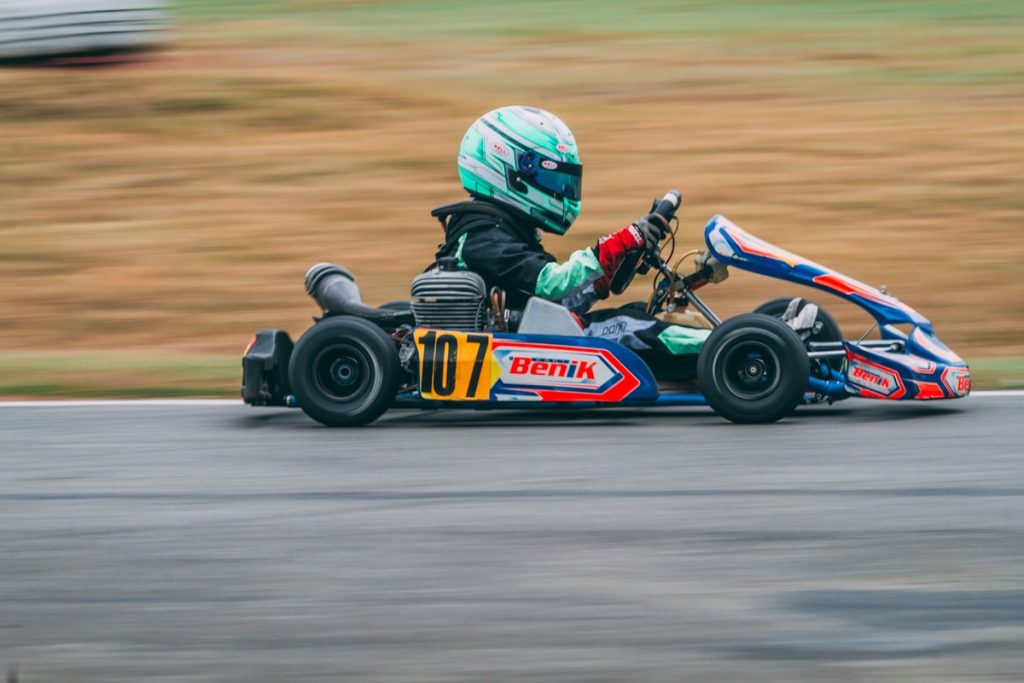
Good karting is less about forcing the kart to go faster and more about losing less speed. A smooth driver who brakes in the right place, uses the full track and makes fewer mistakes will often beat someone who attacks every corner aggressively. These kart racing beginner tips focus on the decisions that make the biggest difference during a first session and help you improve from lap to lap.
Prepare before the first lap
Start with the briefing rather than treating it as a formality. Learn the meaning of the flags, the pit-entry and pit-exit rules, the direction of the circuit and what to do if the kart stops. Track procedures vary between venues, so listen for details about overtaking, yellow-flag zones and restricted areas.
Adjust the seat and pedals before leaving the pits. You should be able to press the brake firmly without fully straightening your leg, while your arms remain slightly bent with both hands on the steering wheel. Sit securely against the seat back. If you are sliding around, steering becomes inconsistent and your legs may tire quickly.
Keep your head up and look well beyond the front of the kart. Your vision should move from the corner entry to the apex and then toward the exit. Looking only at the barrier or the kart immediately ahead makes it harder to judge braking points and can cause late, abrupt inputs.
The basic technique that makes a kart quick
Brake in a straight line
For most kart racing beginners, the first useful target is controlled braking. Brake firmly while the kart is travelling straight, then release pressure as you begin turning. Turning sharply while braking heavily can overload the front tyres and make the kart slide or rotate unexpectedly.
Do not copy a braking marker without testing it. A painted line, marshal post or trackside board can help you choose a reference, but your speed, kart condition and traffic will change the ideal point. If you regularly reach the corner with too much speed, brake earlier. If the kart feels settled and you are waiting before turning, move the braking point slightly later.
Use one clear steering input
Try to make the corner with one deliberate turn rather than sawing the wheel back and forth. Extra steering creates scrub: the tyres slide across the track instead of rolling efficiently. It also unsettles the kart and reduces momentum on the following straight.
At the apex, aim to place the kart close to the inside without touching the kerb or painted areas unless the circuit allows it. The best line is not always the tightest line. A later apex can give you a straighter, faster exit, which matters especially on a long straight or before an overtaking zone.
Prioritise the exit
As the kart reaches the apex, gradually open the steering and apply the throttle smoothly. Avoid stamping on the accelerator while the kart is still sharply turned. If the rear steps out, reduce the throttle slightly and make a small correction; large movements usually create another slide.
For a sequence of corners, sacrifice the first corner when necessary so that the kart is positioned well for the final exit. This is one of the most useful indoor karting tips because a clean exit can protect your position or create an opportunity to pass several seconds later.
How to learn a circuit quickly
Do not try to memorise every detail after one lap. Break the track into sections and identify three reference points for each important corner: where braking begins, where the kart reaches the inside and where full throttle becomes possible. After each lap, change only one element. Moving the braking point, line and throttle timing all at once makes it difficult to understand what helped.
During practice, compare laps by asking specific questions:
- Did the kart slow enough before turn-in?
- Did you reach the apex too early or too late?
- Could you apply power earlier without running wide?
- Did a correction cost speed on the next straight?
A consistent lap is more valuable than a single quick lap followed by an error. If your times vary widely, focus on repeatable braking and steering before searching for a more aggressive racing line. Many beginner karting techniques work only after the basic inputs are controlled.
Racecraft, overtaking and track awareness
Keep a safe gap when following another kart. Turbulent air is less significant at typical rental-kart speeds than visibility and braking uncertainty, so the main risk is arriving at a corner without knowing exactly what the kart ahead will do. Leave enough room to react, particularly near the first corner and during a yellow flag.
A reliable overtake usually starts several corners earlier. Take a clean exit, position the kart alongside on a straight and brake within your own limit. Do not dive toward a closing gap or rely on the other driver to move aside. If you are not clearly alongside before the turn-in point, preparing a stronger exit for the next corner is often faster and safer.
Defend with a single, predictable move. Changing direction repeatedly can surprise the driver behind and may breach track rules. Hold your line through the corner, leave racing room when another kart is established alongside and return attention to the next braking point.
Common mistakes that slow new drivers
- Braking too late: The kart misses the apex, runs wide and loses speed over the entire exit.
- Coasting for too long: Staying off both pedals between braking and acceleration wastes momentum. Use a clear transition.
- Turning more to fix a bad entry: Extra steering rarely solves excess speed. Reduce speed and focus on the exit.
- Watching the kart ahead: Follow its position only for traffic awareness; use the track and your own references to drive.
- Ignoring fatigue: Tired arms and delayed reactions lead to inconsistent laps. Relax your grip and take a break if concentration drops.
Safety and kart preparation
Wear the required helmet and fasten it correctly. Long hair should be secured, loose clothing tucked away and footwear chosen so that the brake and throttle can be felt clearly. Check that the steering, pedals and seat feel normal before leaving the pit area. Report a damaged kart rather than trying to compensate for it on track.
Warm up progressively instead of attacking the first corner at maximum speed. The tyres, your concentration and your understanding of the circuit all improve during the opening laps. Keep both hands available for steering, avoid contact and follow marshal instructions immediately. These habits matter as much as lap time, particularly for anyone learning how to drive a go-kart for the first time.
Frequently asked questions about kart racing
How should a beginner take a karting corner?
Brake while travelling straight, release the brake as you turn, clip a controlled apex and accelerate progressively as the steering opens. Adjust the exact line for the corner’s shape and the next straight.
Is it better to brake early or late in a go-kart?
Brake early enough to make the corner without sliding or running wide. Once the kart feels settled and your exit is consistent, move the braking point later in small increments. A late brake that ruins the exit is usually slower than a slightly earlier, cleaner brake.
How can I improve my karting lap times?
Choose one or two corners that lead onto the longest straights, then work on braking consistency, a later apex where appropriate and earlier smooth throttle. Reducing mistakes and repeating the same line often improves lap times before more aggressive driving does.