
Match Odds Betting Explained: 1X2 Markets, Prices and Probabilities
Learn how match odds betting works, including home, draw and away selections, decimal odds, implied probability, bookmaker margin and the difference between match odds and other football markets.
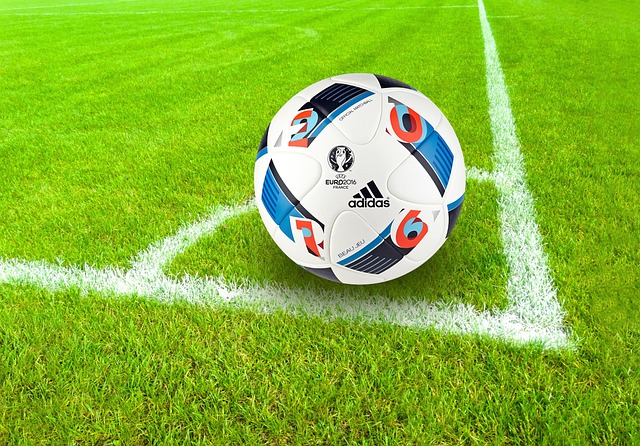
Match odds betting is the market used to predict the result of a match. In a standard football match odds market, you choose one of three outcomes: a home win, a draw or an away win. This is also called the 1X2 market, where 1 means the home team wins, X means the match is drawn and 2 means the away team wins.
The odds show the potential return for a successful wager, including the original stake in most fixed-odds formats. They also reflect the bookmaker’s assessment of each outcome, adjusted to include a margin. Understanding both parts—the result selection and the price attached to it—helps you read match betting markets more accurately.
How the 1X2 match odds market works
Suppose a football fixture is listed with these decimal odds:
- Home win: 2.00
- Draw: 3.40
- Away win: 3.75
A successful £10 bet on the home team at odds of 2.00 returns £20, including the £10 stake. The profit is £10. A £10 draw bet at 3.40 returns £34, producing £24 in profit. If the selected result does not occur, the stake is lost.
Match odds usually refer to the result at the end of normal playing time. In football, that generally means 90 minutes plus stoppage time, not extra time or penalties. Competition rules and sportsbook terms can differ, so check the settlement rules before placing a bet, particularly in knockout competitions.
What decimal odds mean
Decimal odds are common worldwide because the calculation is straightforward:
Total return = stake × decimal odds
To calculate the profit, subtract the original stake from the total return. For example, a £20 wager at 2.50 returns £50, with £30 profit if it wins.
Odds can also be converted into an approximate implied probability:
Implied probability = 1 ÷ decimal odds × 100
Odds of 2.00 imply 50%, while odds of 4.00 imply 25%. This is not a guarantee or a precise prediction. The listed price includes the bookmaker’s margin, and the real chance of an outcome may be different from the raw implied probability.
Understanding the bookmaker margin
If you add the implied probabilities for the home win, draw and away win, the total will usually be above 100%. That excess is known as the overround, bookmaker margin or vig. It gives the bookmaker a mathematical advantage across the market.
Using the example above:
- 2.00 implies 50.00%
- 3.40 implies approximately 29.41%
- 3.75 implies approximately 26.67%
The combined figure is about 106.08%, so the market contains an overround of roughly 6.08%. A lower margin does not make a bet profitable by itself, but comparing prices across reputable operators can help you see how the market is priced.
Match odds compared with other betting markets
Match odds cover the final result, but they are not the only way to bet on a football match.
- Double chance: Covers two of the three results, such as home win or draw.
- Draw no bet: A winning selection earns a profit, while a draw normally returns the stake.
- Both teams to score: Predicts whether both sides will score at least once.
- Over or under goals: Predicts whether the total number of goals will be above or below a listed line.
- Asian handicap: Adjusts the starting advantage or disadvantage between the teams.
These markets use different settlement rules and carry different levels of risk. A draw no bet selection, for example, is not the same as backing the home team in the standard 1X2 market because a draw can lead to a stake refund rather than a loss.
How bettors assess match odds
Odds should be considered alongside the factors that may affect the result. Common areas of analysis include recent performances, home and away records, injuries, suspensions, expected line-ups, fixture congestion, tactical matchups and the strength of the opposition faced.
Team news can be especially relevant shortly before kick-off. A missing goalkeeper, central defender or main striker may influence the price, although the market often reacts quickly when significant information becomes available. Previous head-to-head results can provide context, but they should not be treated as a standalone prediction method because squads, managers and circumstances change.
A useful distinction is the difference between the most likely result and a potentially attractive price. An outcome can be favoured by the market but still offer poor value if its odds are too short. Conversely, a less likely outcome may have a larger price without becoming a sensible bet. No method removes uncertainty from sports betting.
Common questions about match odds betting
Does match odds betting include extra time?
Usually, standard football match odds are settled on the result after normal time, including stoppage time. Extra time and penalties are generally excluded unless the market is specifically labelled to include them.
What happens if a match is abandoned?
Settlement depends on the sportsbook’s rules and the market conditions. Some bets may be void unless the match is completed within a defined period, while certain markets may stand if their outcome has already been determined.
Are higher odds better?
Higher odds offer a larger potential return but represent a lower estimated probability in the market. Price alone does not indicate quality. The relevant question is whether the odds fairly reflect the outcome’s actual likelihood, which cannot be known with certainty before the match.
Can match odds betting guarantee a profit?
No. Football results are uncertain, and bookmaker margins mean that repeated betting carries a structural disadvantage unless a bettor can identify genuine pricing errors. Set a budget, avoid chasing losses and only bet money you can afford to lose. Gambling should be treated as entertainment, not as a way to make income.