
First-Half Cards Betting Explained: Markets, Rules and Useful Factors
Learn how first-half cards betting works, including card lines, settlement rules, referee trends, match context and the risks that can affect a wager.
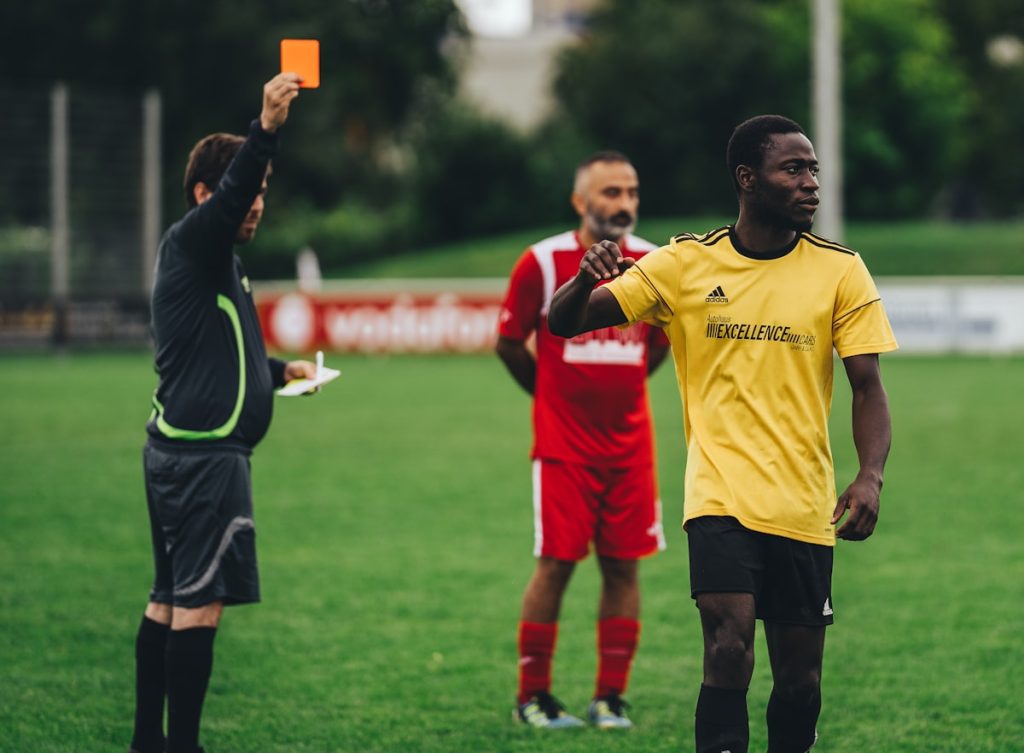
First-half cards betting focuses only on disciplinary action before the interval. Depending on the sportsbook, you may be able to bet on the total number of cards, whether a team receives more cards, or whether a card is shown within a particular period. The market can look simple, but its rules vary, so checking the settlement terms matters before placing a wager.
What first-half cards betting means
A first-half card bet is settled using events that happen from kick-off until the end of the first half, including any added time. Cards shown after half-time do not count. Some bookmakers include only yellow and red cards, while others use a card-points system in which different cards have different values.
The most common markets include:
- First-half total cards: You predict whether the number of qualifying cards will be over or under a bookmaker’s line.
- First-half card handicap: One team is given a virtual advantage or disadvantage based on card totals.
- Team first-half cards: You bet on the number of cards received by one selected team before half-time.
- First-half card race: You predict which team will receive the first card or reach a specified card total first.
- First-half card timing: You choose a time band in which a card will be shown.
A market labelled “over 1.5 first-half cards” usually requires at least two qualifying cards before the break. An “under 2.5” selection normally wins with zero, one or two cards. The exact meaning of a card, booking and dismissal should always be confirmed in the sportsbook’s rules.
How card totals and card points are settled
Bookmakers commonly use either a card count or card points. With a card count, every qualifying card is treated according to the stated rules. With card points, a yellow card may receive one value and a red card another. A second yellow leading to a sending-off may be handled differently from a straight red card.
There can also be differences over players who are substituted, staff members on the bench, cards shown after an incident, and bookings issued during half-time. Some operators count only cards shown to players on the pitch. Others may include team officials or apply a specific points formula.
For that reason, compare the market wording with the settlement section rather than assuming every betting site uses the same method. If a match is abandoned or postponed, the bookmaker may apply a minimum playing-time rule before settling the bet.
What can influence first-half card numbers?
Match context is usually more useful than a team’s overall season card average. A fixture with a strong rivalry, a high table incentive or a history of repeated fouls may produce more early disciplinary action. Competition rules and officiating standards can also change the typical card rate.
- Referee profile: The official’s average bookings, foul threshold and tendency to manage dissent can affect the market.
- Playing style: Aggressive pressing, defensive transitions and frequent tactical fouls may create early card opportunities.
- Expected pressure: A team defending against sustained attacks may commit more fouls, especially in wide areas or during counterattacks.
- Fixture history: Rivalries and previous confrontations can raise the emotional temperature, although old meetings should not be treated as a guarantee.
- Team selection: Missing defenders, changes in midfield or an inexperienced replacement can alter how a side handles pressure.
- Match state: A quick goal may reduce or increase card pressure depending on which team is forced to chase the game.
First-half data should be separated from full-match data. A team that frequently receives cards late in matches may not be a strong candidate for an early-card selection. Look for first-half foul and booking patterns, the referee’s recent assignments and the likely tactical approach.
Reading first-half card lines
The betting line reflects the bookmaker’s estimate of the likely card total, adjusted for the margin included in the odds. Lines such as 0.5, 1.5 or 2.5 cards divide the market into outcomes that are easier to interpret. Asian-style lines can use whole numbers, such as two cards, where exactly two may result in a push or void depending on the rules.
Odds should not be read as a prediction that the outcome will happen. They represent an implied probability after accounting for the bookmaker’s margin. A selection can have attractive odds and still be a poor bet if the available price does not match the probability suggested by the evidence.
Live first-half cards markets work differently from pre-match markets. Once the match begins, the score, foul count, referee behaviour and tactical changes become visible. However, live prices also move quickly, markets may suspend after an incident, and a bet placed immediately before a booking can be rejected or repriced.
Common mistakes in cards betting
One frequent mistake is relying on a team’s reputation instead of current evidence. A club known for physical football may have changed coach, formation or personnel. Another is treating a referee’s long-term average as a fixed rule; recent appointments, league standards and the type of match all provide useful context.
Do not count every foul as a likely booking. Referees often allow minor contact, while dissent, stopping a promising attack and repeated fouling are more closely linked to cards. It is also risky to assume a heated rivalry automatically produces a high first-half total. Some matches become cautious and slow because both teams are trying to avoid an early mistake.
Keep the stake small enough that a losing bet does not affect essential spending. Betting markets involve uncertainty, and statistical research cannot remove the possibility of an unexpected referee decision, tactical change or quiet match.
Questions to check before placing a bet
- Does the market count only the first half and added time?
- Are red cards, second yellows and bench bookings included?
- Is the market based on card numbers or card points?
- What happens if the match is abandoned or the first half is not completed?
- Are live bets suspended during VAR reviews or immediately after a booking?
- Does the selected line use whole-card settlement, half-card lines or a handicap?
Understanding these details is as important as comparing team and referee statistics. First-half cards betting is a short-period market, so one decision can determine the result. Treat the research as a way to assess probability, not as a promise of profit, and use only a budget set aside for entertainment.