
BTTS Both Halves Meaning: What the Football Betting Market Requires
BTTS Both Halves means both teams must score in the first half and again in the second half. Learn how the market works, how it differs from regular BTTS, and what to check before placing a bet.
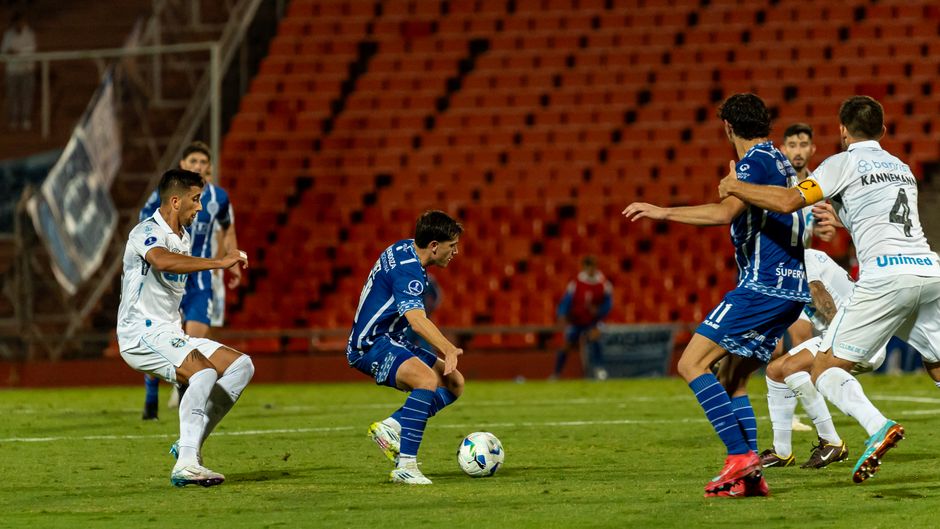
A match can finish 2–2 and still lose a BTTS Both Halves bet. The reason is simple: this market does not only ask whether both teams score during the game. It requires both sides to find the net in each half separately.
What does BTTS Both Halves mean?
BTTS stands for “Both Teams To Score.” In the standard BTTS market, a bet on “Yes” wins if each team scores at least once before the final whistle, regardless of when those goals arrive.
BTTS Both Halves adds a timing condition. For the bet to win:
- Both teams must score at least once in the first half.
- Both teams must score at least once in the second half.
That means each team must score in both halves. A qualifying match could finish 2–2 with one goal from each side before half-time and one goal from each side after the interval. A 1–1 half-time score followed by a 1–0 second half would not qualify because only one team scored after the break.
How the market differs from regular BTTS
Regular BTTS is based on the full match. Scores such as 1–1, 2–1 or 3–2 can all produce a winning “Yes” result because both teams scored at some point.
BTTS in both halves is more demanding. Consider these examples:
| Half-time score | Second-half score | Final score | BTTS Both Halves |
|---|---|---|---|
| 1–1 | 1–1 | 2–2 | Wins |
| 1–1 | 1–0 | 2–1 | Loses |
| 2–0 | 1–1 | 3–1 | Loses |
| 0–0 | 2–2 | 2–2 | Loses |
The last example is particularly easy to misunderstand. Both teams scored in the match, but neither scored in the first half, so the “both teams to score in both halves” requirement was not met.
Why BTTS in each half is difficult to land
This market combines four separate scoring events: one goal from each team before half-time and one goal from each team after half-time. A single quiet period, tactical adjustment or missed opportunity can be enough to settle the bet as a loser.
It is also more sensitive to match context than a conventional BTTS selection. A team may attack aggressively early but protect a lead after the interval. Another side may score late but fail to create chances in the opening 45 minutes. Even games with strong attacking statistics do not guarantee a goal from both teams in both periods.
Odds are usually higher than for standard BTTS because the condition is less likely. Higher odds should not be treated as evidence that the selection offers value. They reflect the bookmaker’s assessment of the outcome’s probability and include a margin.
What to check before considering the bet
Past results can help describe a team’s scoring pattern, but they should not be used in isolation. Look at how often each side scores and concedes in the first half and second half, rather than relying only on full-time BTTS figures.
- First-half attacking output: Check whether both teams regularly create and convert chances before the break.
- Second-half tendencies: Review goals after half-time, including whether either team becomes more defensive after taking the lead.
- Home and away splits: A side may be productive at home but cautious on the road.
- Expected line-ups: Missing forwards, playmakers or central defenders can change the attacking balance.
- Match incentives: A knockout tie, relegation battle or fixture affected by a crowded schedule may produce a different rhythm.
- Recent strength of opposition: A run of high-scoring matches against weak defences may give a misleading impression.
Head-to-head records can provide context, but old meetings often have limited predictive value because managers, players and tactical systems change.
Common mistakes when reading the selection
The most frequent error is confusing “BTTS Both Halves” with “BTTS and Over 1.5 Goals.” The latter normally requires both teams to score and the match to contain at least two goals overall. BTTS Both Halves requires a specific distribution of goals across the two halves and therefore sets a much stricter condition.
Another mistake is assuming that a goal in added time belongs to the half shown on the match settlement. Sportsbooks generally follow the official match timing and their own settlement rules, so the market’s terms should be checked before betting. Extra-time rules also vary: many standard 90-minute football markets exclude extra time unless the bookmaker states otherwise.
Understanding the risk
BTTS Both Halves is a high-variance football market. A strong attacking fixture may still produce a 0–0 first half, a one-sided second half or a late injury that changes the game completely. No statistic can remove that uncertainty.
If you choose to bet, decide on a fixed budget before reviewing the odds, avoid chasing losses and treat the wager as entertainment rather than income. In some countries, licensed operators provide deposit limits, time-outs and self-exclusion tools for people who want additional control.
In plain terms
BTTS Both Halves means both teams must score in the first half and both teams must score in the second half. A match can satisfy regular BTTS and still fail this market if one team does not score in one of the two periods. Reading the wording carefully is the most important part of understanding the selection.